Dr. Chuan Li Receives Arteriosclerosis, Thrombosis and Vascular Biology Travel Award for Young Investigators
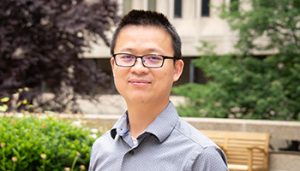
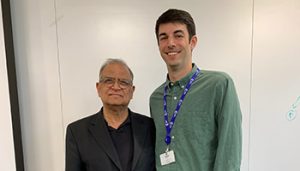
Dr. Chuan Li received the Arteriosclerosis, Thrombosis and Vascular Biology Travel Award for Young Investigators
Dr. Chuan Li received the Arteriosclerosis, Thrombosis and Vascular Biology Travel Award for Young Investigators for his abstract presentation during the Vascular Discovery: From Genes to Medicine 2019 Scientific Sessions in Boston, MA. Only 10 recipients were selected from close to 1,000 presenters at this conference. Dr. Li is a postdoctoral fellow in Dr. Beiyan Zhou’s lab.

Dr. Li has been asked to re-present his abstract at the American Heart Association Conference.

Dr. Clinton Mathias Receives AAI Award

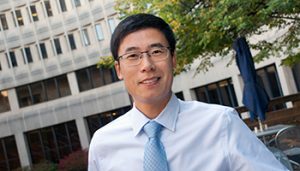
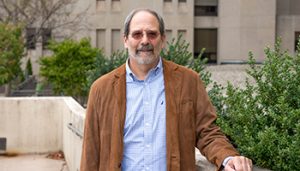
Clinton B. Mathias, Ph.D.
The American Association of Immunologists announces the 2019 recipients of AAI Awards for outstanding research and career achievements. Former Immunology graduate student Dr. Clinton Mathias of Western New England University has received this honor for outstanding service to AAI and the immunology community as director of the AAI High School Teachers Program from 2012-2018.

Dr. Jenna Bartley

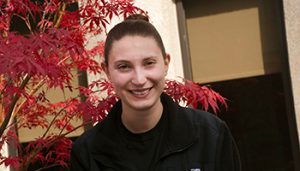
Jenna Bartley, Ph.D.
We welcome Dr. Jenna Bartley as an assistant professor to the Department of Immunology. Dr. Bartley studies translational research into human aging with a focus on how immune responses and physical function decline as we get older.

Dr. Penghua Wang

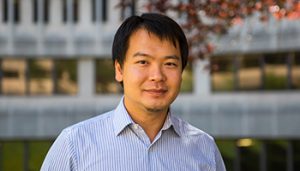
Penghua Wang, Ph.D.
We welcome Dr. Penghua Wang as an assistant professor to the Department of Immunology. Dr. Wang’s research is focused primarily in host-pathogen interactions, with a focus on RNA viruses in vivo and in vitro.

Rathinam Lab Discovers New Role for Gasdermin D

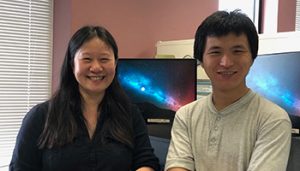
Ishita Banerjee and Vijay Rathinam, Ph.D., D.V.M., in the lab
The Rathinam lab has discovered a new role for the cell death protein Gasdermin D. Their latest Immunity paper first authored by Ishita Banerjee, an Immunology graduate student, demonstrates that gasdermin D inhibits the production of type I interferon molecules in response to self and foreign DNA that entered the cytosol. Since type I interferons have profound roles in autoimmune diseases such as lupus and cancer immunity, the findings from this study may have therapeutic implications. View the study.