Month: September 2026

Public Health Happening – First Days & Fresh Starts

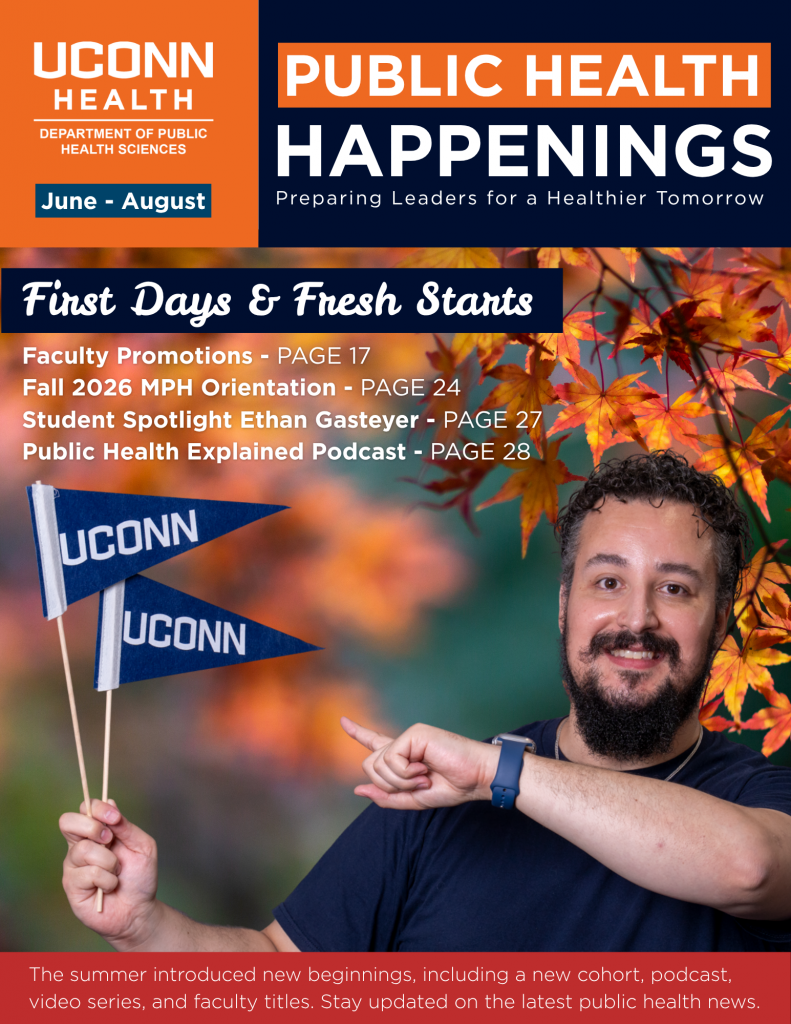
The latest issue of our Public Health Sciences newsletter is now available!

This interactive PDF allows you to:

  • Click directly to different sections
  • Watch embedded videos
  • Explore links to articles, events, and resources

We encourage you to take a look and explore all the work happening across our department—from research and community engagement to student and faculty highlights.

Read it here

newsletter cover

New Study Links Air Pollution to Heart Disease via Cell Aging

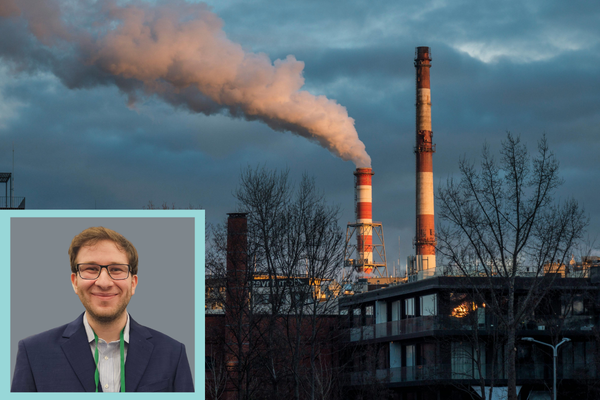
Nicholas Pellegrino, PhD student, in an inset headshot over industrial smokestacks emitting smoke at dusk.

A new paper in Science of The Total Environment from PhD student Nicholas Pellegrino and Dr. Chia-Ling Kuo explores how air pollution may contribute to heart disease. They worked with colleagues Breno S. Diniz, Ying Zhou, Richard H. Fortinsky, George A. Kuchel, and Doug Brugge.

The team: Pellegrino led the analysis and drafting. Kuo, who contributed to the study design, data curation, and writing, is a co-author and the corresponding author.

What they did: The team analyzed data from more than 38,000 UK Biobank participants followed for an average of 13 years. They looked at fine particulate air pollution (PM2.5), a marker of cellular aging based on 94 blood proteins, and new cases of atherosclerotic cardiovascular disease.

What they found: Higher PM2.5 exposure was linked to higher levels of the aging marker and to a greater risk of cardiovascular disease. Higher levels of the marker were themselves linked to greater disease risk. Statistically, the marker accounted for about 5.5% of the pollution–disease link, which suggests cellular aging is one piece of how air pollution harms the heart.

Why it matters: Air pollution is one of the world’s leading environmental health threats, and this is among the first studies to test cellular senescence as a biological pathway between pollution and heart disease. Understanding that pathway could help guide future prevention and public health efforts.

Read the paper: https://doi.org/10.1016/j.scitotenv.2026.182315
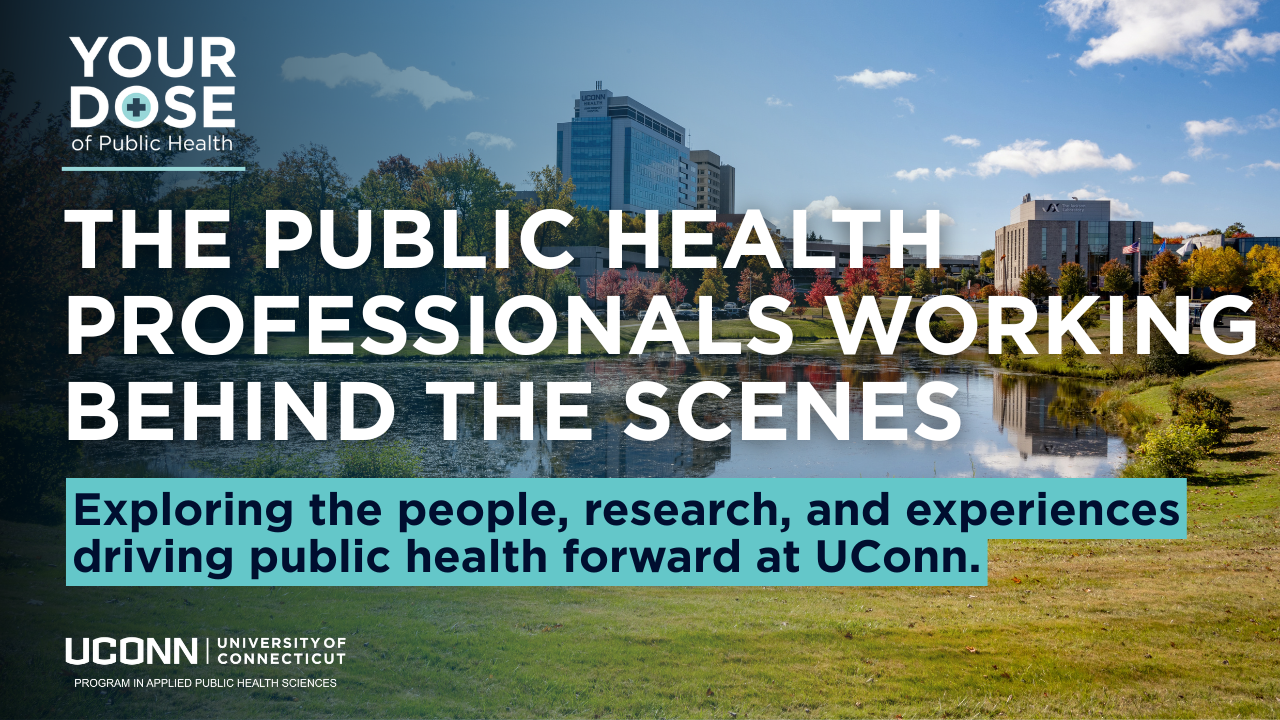
The Work Behind Healthier Communities

When most people think about public health, they think about the outcomes: healthier communities, disease prevention, clean air, safer workplaces, and access to reliable health information. What often goes unnoticed are the people behind those efforts. Public health professionals work across research, healthcare, government, nonprofits, education, and industry to address complex health challenges and improve lives.

Read our latest edition of, Your Dose of Public Health today!

New Research Reveals Hidden Pollution Risks Associated with BMI

Portrait of Doug Brugge and stock image of pollution

Not everyone faces the same health risks from air pollution. New research from the UConn School of Medicine found that excess abdominal fat, measured by waist size rather than BMI alone, may make people more vulnerable to the harmful effects of ultrafine air pollution. Researchers also found that people with higher levels of visceral fat appeared to benefit more from HEPA air filtration, offering new insights into who may need added protection from pollution exposure. This work helps move us closer to more personalized approaches to preventing disease and protecting community health.

Read on UConn Today: https://lnkd.in/dGqgmRG6

Faculty Promotions

"Graphic with dark navy background titled 'FACULTY PROMOTIONS' in bold white text, surrounded by colorful confetti illustrations. Below are two headshot photos in teal-bordered squares: on the left, a smiling woman with long brown hair, labeled 'Dr. Natalie Moore'; on the right, a smiling man with short dark hair and glasses wearing a white collared shirt, labeled 'Dr. Greg Rhee.'"

The Department of Public Health Sciences is pleased to share news of two recent faculty promotions, approved by the Academic Affairs Subcommittee and the Board of Directors.

  • Dr. Greg Rhee has been promoted to Professor with tenure.
  • Dr. Natalie Moore has been promoted to Associate Professor.

Both promotions recognize their outstanding contributions to public health research, teaching, and service. Please join us in congratulating Dr. Rhee and Dr. Moore on this well-earned recognition!