As a new residency program, we welcome two residents per year and offer a unique opportunity for residents to help build a culture of excellence while receiving personalized training, close faculty mentorship, and extensive support for their professional growth.
This July, the UConn School of Medicine’s Department of Pathology and Laboratory began training two residents in its newly established and nationally accredited Pathology Residency.
It has been decades since UConn has had a residency program training future pathologists.
The new Pathology Residency plans to accept two new residents each year, for training within the four-year Anatomic Pathology/Clinical Pathology program. It is led by Program Director Dr. Gahie Nam, a faculty member at the UConn School of Medicine for the last six years who trained at Brown University. She is medical director for UConn Health’s Surgical Pathology and Histology within the Anatomic Pathology division of the Pathology and Laboratory Medicine department. “It is an exciting time for a new residency training program to launch at UConn in pathology as the future of the field is rapidly evolving right now. Pathology is going digital! We plan to transition from the sole use of the microscope and glass slides to digitalized slides. Now with the digital revolution, glass slides can be scanned and made more accessible rapidly to our faculty, trainees, and healthcare providers for use during patient consultations, education and research,” says Nam. The two inaugural pathology residents began training this July after being selected from a very competitive, large pool of candidates.
Meet Our Incoming Residents
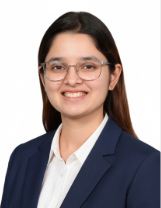
Dr. Sonam Talreja joins UConn after being a pathology research fellow at the University of Michigan focusing on inflammatory and immunological disease related to skin, gastrointestinal and hepatobiliary systems. She graduated from Chandka Medical College, Pakistan and received MBBS in 2014. She subsequently completed M.Phil in Surgical Pathology where she received a Best Teaching Award in Pathology from the medical students. She then worked as a Pathology lecturer in her home country of Pakistan where she continued to teach third year medical students Pathology and assisted surgical pathology service work.
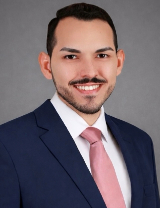
Dr. Gabriel Pastrana joins after previous exposures to surgical pathology and cytopathology in various academic hospital settings and has recently published an interesting case report of Bladder Washing Cytology in the Detection of High-Grade Prostatic Adenocarcinoma. He graduated from the University of Medicine & Health Sciences, St Kitts receiving MD with High Honors in 2025. He received Bachelor of Science in Biology, University of Puerto Rico, San Juan, PR in 2020.
Talreja and Pastrana are both excited to be part of the new UConn pathology residency.
Pastrana shares, “Something resonates with me about the chance not just to train within a program but to help build one, to contribute to its culture and identify from the very beginning.”
“Our UConn pathology team is very passionate about what we do! As an academic medical institution, at UConn we love to teach and train the future generation of experts. We are very excited about these two talented trainees coming to UConn for pathology residency training. They are passionate about pathology just like us, and are a great fit for our team,” says Nam.
These pathology residents and future ones are training at UConn School of Medicine across a vast mixture of training and clinical rotations during the four-year residency program. They will train in surgical pathology, autopsy, cytology, molecular pathology, dermatopathology, neuropathology, and medical renal, microbiology, blood bank/ transfusion medicine, chemistry, immunology, urinalysis, hematopathology, coagulation, flow cytometry, lab management, elective/ research time.
In addition, residents will also have opportunity for training rotations outside of UConn Health with its affiliated institutions and rotations such as Pediatric Pathology at Hartford Hospital, the Forensic Pathology at the Office of the State Medical Examiner, The Jackson Laboratory for Genomic Medicine’s molecular pathology team, and even the Connecticut American Red Cross to learn about its donor blood bank services.
“UConn looks forward to once again training the next generation of pathologists to enter our state’s healthcare workforce,” concludes Nam.