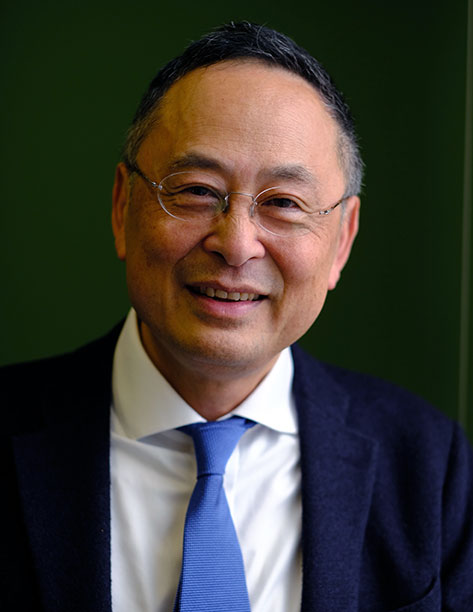
Gerald Chan
Scientist and Venture Capitalist
Gerald Chan is a scientist and venture capitalist who has forged transformative changes across many fields in medicine and healthcare.
Chan is a co-founder of Morningside, a venture investment enterprise that starts and builds science- and technology-based companies. Working with academic scientists, he has started over two dozen biotech companies across diverse therapeutic areas. Some of these companies have opened up entirely new fields of medicine. For example, he took over 20 years to build Stealth BioTherapeutics, which developed the first FDA-approved drug for mitochondrial dysfunction. Over 15 years, he built Apellis Pharmaceuticals, which developed a drug that inhibits the complement cascade of the innate immune system for treating autoimmune kidney diseases and for slowing progression of age-related macular degeneration. In neurology, he spun technologies out of MIT and built two companies: Cognito Therapeutics, which is developing non-invasive neurostimulation to slow the progression of Alzheimer’s disease, and Encora, which has an FDA-approved neuromodulation device for stopping essential tremor.
He has also launched a number of companies that use artificial intelligence to improve health care quality and access. These companies include Linus Health, which uses AI to measure cognitive impairment with sub-clinical sensitivity; Cognoa, which utilizes AI to render fast and accurate diagnosis for children on the autism spectrum; and Ieso, which uses AI agents to deliver cognitive behavioral therapy.
An incisive critic of higher education, Chan has put forth ideas for radical reforms of universities in America in his recent lectures — the Frank Rhodes Lecture in Arizona State University; the McKay Lecture in University of Michigan; and the Dean’s Distinguished Lecture in the College of Computing, Data Science and Society, University of California, Berkeley.
Chan received his undergraduate and master’s degrees in engineering from UCLA, as well as a master’s degree in medical radiological physics and a Doctor of Science degree in radiation biology from Harvard University. He received his postdoctoral training at the Laboratory of Biochemical Pharmacology, Dana-Farber Cancer Institute. He has received eight honorary degrees and is a Distinguished Fellow of the Harvard T.H. Chan School of Public Health. He is a Fellow of the American Academy of Arts and Sciences, the American Association for the Advancement of Science, and the British Academy of Social Sciences. In 2026, he was the recipient of the Gordon and Llura Gund Leadership Award from Research!America for his advocacy for medical and public health research.
Student Speakers
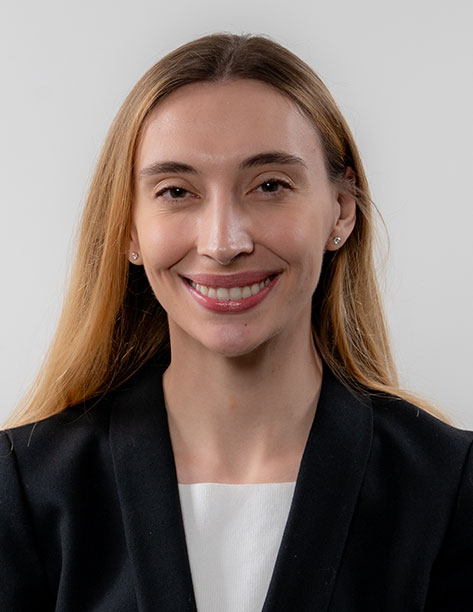
School of Medicine: Madeleine Tessier-Kay
Madeleine Tessier-Kay was raised in Wayne, Pennsylvania, but has considered Connecticut home since her family moved here 10 years ago.
Tessier-Kay grew up as a student-athlete and played basketball at Harvard College, where she concentrated in neuroscience, and global health and health Policy. While at Harvard, Madeleine had formative public and global health experiences, working with the NBA in Phokeng, South Africa, and serving as a Harvard Global Health Institute Fellow with Partners in Health in Rwinkwavu and Kigali, Rwanda. In 2021, she earned her Master of Public Health in chronic disease epidemiology at the Yale School of Public Health. There, she created a social-ecological framework for the New Mexico Department of Health on the changing epidemiologic landscape of substance use disorders in the wake of the COVID-19 pandemic, and, in collaboration with the American Cancer Society, completed a thesis on survivorship care utilization. Following her MPH, Madeleine conducted clinical research at the Yale School of Medicine with the Department of Psychiatry, helping to implement a collaborative model to optimize care for pregnant and postpartum women with a history of opioid use.
At UConn School of Medicine, Tessier-Kay quickly found dermatology, drawn to the opportunity to interpret disease through direct observation and intrigued by how the field bridges disciplines, including immunology, infectious disease, rheumatology, and histopathology. Her research has focused on the intersection of dermatology and public health and includes projects characterizing access to specialized dermatologic care among pediatric Medicaid beneficiaries. She has also been actively involved in community outreach and student leadership, organizing skin cancer screenings in the greater Hartford community and serving as the elected class representative for the Academic Integrity Board.
Tessier-Kay will be completing her dermatology residency at Johns Hopkins University. Ultimately, she envisions a career that blends clinical care with research and advocacy aimed at improving access to care and reducing health disparities.
She is deeply grateful to her family, friends, and mentors for their unwavering support and for making it possible for her to be where she is today.
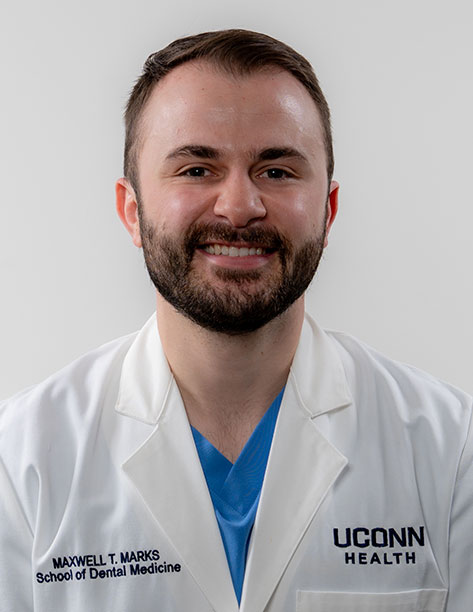
School of Dental Medicine: Maxwell Marks
Max Marks grew up in Sammamish, Washington, where he developed a love for sports, hiking, and kayaking. Some of these passions stemmed from his involvement in Boy Scouts, during which he led the organization and shipment of disaster relief kits to Haiti following the 7.0 magnitude earthquake in 2010. While volunteering as a math tutor at his local elementary school for several years, he further developed a passion for mentorship and helping others.
Marks earned his Bachelor of Science in exercise science, with a minor in Spanish, from Brigham Young University in Provo, Utah. After a year of studying, Marks served an ecclesiastical mission for two years in Cali, Colombia, where he learned to speak Spanish. Upon returning to his studies, he began gravitating toward a profession in health care while serving as a Spanish interpreter and phlebotomist at a free health clinic in Midvale, Utah.
Over the past four years, Marks has been an Urban Service Track/AHEC scholar, leading the development and production of over 30 podcasts on interprofessional education, team-based care, and social determinants of health. Marks also completed the ADEA Academic Dental Careers Fellowship program, developing an AI-facilitated chatbot to enhance caregiver and parental education in pediatric dentistry in collaboration with faculty at Dartmouth School of Medicine.
Upon graduation, Marks will be pursuing advanced education training in pediatric dentistry at The Ohio State University/Nationwide Children's Hospital. Along with his wife Bethany and their newborn son Owen, Marks is looking forward to the next adventure. Reflecting on his time at UConn, Marks will be forever grateful for the mentors who shaped the clinician and the person he has become.

The Graduate School: Michael Raizin
Michael Raizin grew up in North Andover, Massachusetts, surrounded by familial role models and relatives in health care and life and health science fields who helped foster his interest and passion in sciences and all aspects of health, including humans, animals, and the environment. This grew into a passion for public health and the “One Health” approach of interconnectivity between human, animal, and environmental health.
Raizin earned his Bachelor of Science in pathobiology with a minor in animal science from UConn and joined the Master of Public Health FastTrack program midway through his undergraduate career. At UConn, Raizin participated in research experiences in both pathobiology and anthropology, allowing him to gain a wide array of research skills from animal and pathogen wet lab settings to ethnographic human research out in the field. His passion and calling to public health became clear to him after embracing the “One Health” ideology, seeing that public health was the platform and vehicle through which all aspects of health can be addressed from local populations to a global scale in a way that emphasizes people, prevention, and preserving health, instead of solely treating illness.
At UConn Health, Raizin learned the full scope and interdisciplinary view of public health practice while engaging with community members, partners, and colleagues from populations globally and close to home. He has made numerous connections that have fortified his appreciation for the interpersonal core of public health and provided lifelong friends.
He is grateful for his education and the opportunities UConn has provided him. He will be heading across the world to the Philippines to serve in the Peace Corps. As he looks back on his time at UConn, Raizin appreciates the professors, mentors, and peers who, along the way, have supported, collaborated, challenged, and helped mold him into the public health advocate and professional that he is today. His biggest pieces of advice to students are to not be afraid to ask questions, find good mentors, and to stay curious.