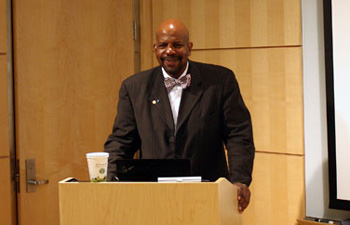
The Urban Education Institute invited me to join them in late March at North Carolina State A&T State University in Greensboro, NC. For those who may not know, the Institute is a meeting space for individuals and groups to examine critical issues that impact learners in urban contexts, share methods and approaches they utilize to address these issues, and brainstorm concrete steps to move forward as a critical mass of colleagues and collaborators. This year’s theme was “African American Males in the STEM Professions: Strategies, Practices, Exemplars.”
I led a session entitled “Preparing for Surgery.” It focused on challenges and barriers encountered by minority males, particularly African Americans, when they pursue careers in medicine. During the discussion, I shared my own experience as an African American physician in America, emphasizing the importance of mentoring, the prerequisite knowledge and skills, and academic programming that are important in the medical profession. In addition, I offered recommendations for concrete strategies and practices that I have used at public schools, universities, and in the community to encourage more minority males to pursue careers in medicine.
I saw an awesome group of African American scientists including one of my mentors, Dr. Louis Sullivan, and the legendary Dr. John Slaughter. I also had the opportunity to interact with Dr. James Stith, a physicist who has played an important role in increasing the role of African Americans in the physical sciences. He gave an incredible talk to the group, and I connected with everything he said. I look forward to collaborating with him in the future.
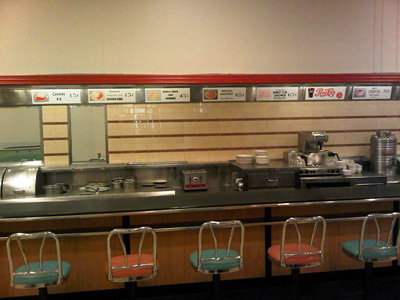
During my time in Greensboro, I visited the Woolworth’s where, in 1960, four male students sat down at the “whites only” lunch counter and ordered coffee. When they were refused service, they stayed until closing in nonviolent protest. The next day, another 20 students joined them, and by the fourth day, the number rose to 300, and organizers agreed to spread their nonviolent sit-in to the lunch counter at Greensboro’s Kress store. Within a week, students in other North Carolina towns launched their own sit-ins, and the movement spread throughout the South. On July 25, local store owners abandoned their segregation policies and a day later, the entire Woolworth’s chain was desegregated, serving blacks and whites alike.
I came away from my visit thankful for all those in the past whose actions have allowed me to be here, as well as those present-day mentors who sustain me now. Moreover, I reaffirm my pledge to give back by influencing the generations to come.
 Shaun is a third-year M.D./Ph.D. student doing his Ph.D. thesis in my laboratory at the Institute for Regenerative Engineering. Prior to coming to UConn, Shaun worked with me at the University of Virginia where his main research focus was using hydrogels to delivery bioactive molecules that aid in bone regeneration. He also has worked in the private sector conducting novel bio-implant and tissue engineering research. Specifically his research focused on the development of an artificial ACL ligament using three-dimensional braided microfibers as well as osteo-differentiation using a laser-guided surface-etching technique on titanium implants.
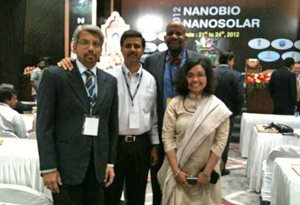 I was fortunate to be asked to provide a keynote speech for the Second International Conference on Nanotechnology held in Kochi, India. There I was reunited with some of my former students, all of whom are now professors. Swami Sethuranum (left) is the director of the Center for Nanotechnology at SASTRA University near Chennai, India; Dhiru Katti (center) is a leading researcher at the Indian Institute of Technology at Kanpur; and Lakshmi Nair (right) is an outstanding scientist who has been with me since our days at Drexel University in the 1990s. She is currently a core member of the Institute for Regenerative Engineering at the University of Connecticut. All are internationally known for their work in nanotechnology, and all were invited to speak at this conference.
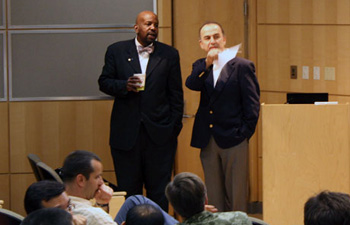 In late January, I had the opportunity to participate in the Biomedical Engineering Distinguished Seminar Series at UC Davis. It was an honor to give a lecture at an institution with such outstanding faculty and staff, as well as interesting students. My lecture was entitled “Regenerative Engineering of Hard and Soft Musculoskeletal Tissues.” I thank UC Davis and Professor Kyriacos Athanasiou, Chairman of the Department of Biomedical Engineering, in particular, for inviting me to visit this great institution. I look forward to working with my colleagues at UC Davis in the future.