I had the honor to be invited to Girona, Spain where I gave the opening keynote speech for the 2015 Gordon Research Conference. This year’s theme was “Regenerative Engineering and Functional Materials Integration,” a new area our institute has pioneered. It featured multidisciplinary presentations by bioengineers, chemists, and clinical scientists on emerging topics in immunology and stem cells, as well as basic and translational aspects of biomaterials science. It was great seeing the extraordinary research being performed by researchers around the world. The conference was chaired by Professor Edward Botchwey of the Department of Biomedical Engineering at Georgia Tech. Ed was one of my graduate students at Drexel who moved with me to be a professor at the University of Virginia. It’s always great seeing my students who are now noted professors in academia all over the world.
2015 Gordon Research Conference
August 20, 2015
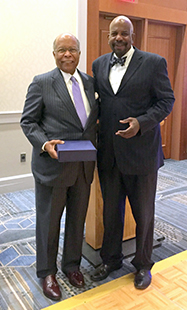 On June 13, the Connecticut Institute for Clinical and Translational Science (CICATS) at UConn, in partnership with the Connecticut Legislative Black and Puerto Rican Caucus and the W. Montague Cobb/NMA Health Institute, hosted the National Health Disparities Elimination Summit here at UConn Health. The summit’s theme was “Keeping It Real: Real Solutions, Real Change.” Our aim was spearheading an important dialogue and generate actionable solutions to eliminate health disparities. The summit provided an opportunity for stakeholders to learn from and engage with national champions in the fight to eliminate health disparities. One of the summit’s major goals was building on the collective knowledge of our speakers and presenters to foster a lasting network of collaborative partnerships among the researchers, physicians, students, and community leaders who attended.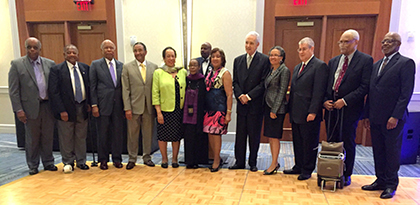
 On August 5, Eric N. James, a member of the Institute for Regenerative Engineering, successfully defended his Ph.D. thesis, “Post-Transcriptional Regulation in Osteoblast Using Localized Delivery of microRNAs from Nanofibers.” Eric wrote his thesis under the supervision of Dr. Lakshmi S. Nair as part of Skeletal, Craniofacial and Oral Biology Graduate Program. Members of his committee also included Drs. Anne Delany and Yusuf Khan.
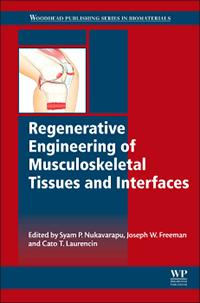 The Institute for Regenerative Engineering recently published a new textbook, Regenerative Engineering of Musculoskeletal Tissues and Interfaces. Published by Woodhead Publishing Ltd, this comprehensive book looks at individual musculoskeletal tissues as well as tissue interfaces. Early chapters cover various fundamentals of biomaterials and scaffolds, types of cells, growth factors, and mechanical forces, moving on to discuss tissue-engineering strategies for bone, tendon, ligament, cartilage, meniscus, and muscle, as well as progress and advances in tissue vascularization and nerve innervation of the individual tissues. Late chapters present information on musculoskeletal tissue interfaces. As the chief editor, I want to express my gratitude first and foremost to all our contributors and especially, my co-editors, Drs. Joseph Freeman and Syam Nukavarapu, for their tireless efforts and time to edit this book.
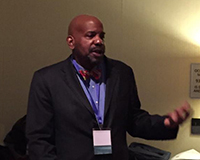 I am happy to announce that Springer Publishing has officially launched the international journal, Regenerative Engineering and Translational Medicine in partnership with the newly formed Regenerative Engineering Society. The new journal will cover the convergence of multiple fields including tissue generation, advanced materials science, stem cell research, the physical sciences, and developmental biology. The senior editorial team includes managing editor, Lakshmi S. Nair, MPhil, PhD, and assistant managing editor, Tao Jiang, PhD, MBA, both of the University of Connecticut; and news and views editor, Ali Khademhosseini, PhD, of Harvard University. Regenerative Engineering and Translational Medicine is currently seeking submissions. For information and online submission instructions, please visit the
 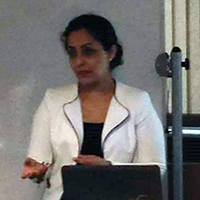 On April 10th, Paiyz Mikael successfully defended her Ph.D. thesis and completed her work with the Institute for Regenerative Engineering. Paiyz joined the Institute under the guidance of Dr. Syam Nukavarapu as part of UConn’s Biomedical Engineering Program. Her thesis focused on developing mechanically superior polymeric-carbon nanotube composite scaffolds for the regeneration of segmental bone defects.
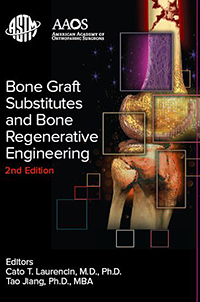 The Institute for Regenerative Engineering has published the landmark book Bone Graft Substitutes and Bone Regenerative Engineering. The book provides a well-rounded and articulate summary of the present status of using allogeneic, xenogenic, and synthetic bone graft substitutes to reconstruct bone tissues. To reflect on the importance of the concept of convergence, Bone Graft Substitutes and Bone Regenerative Engineering captures the excitement of the new field we call Regenerative Engineering. The chapters of the book are written by the leading researchers in academia, surgeons, industry leaders and regulatory specialists. We believe this new book, following the very successful first edition entitled Bone Graft Substitutes, will be of value to people who work in all fields involving bone. I thank Dr. Tao Jiang, my co-editor, for his time and effort in working with me. In addition, the publication of this book would be impossible without the assistance from numerous people at ASTM International. Finally, I also want to thank the Raymond and Beverly Sackler Foundation for their tremendous support in all our efforts to define the new field of Regenerative Engineering.
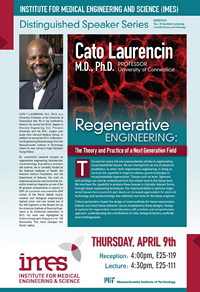 On April 9, I gave a plenary lecture as part of the Institute for Medical Engineering & Science (IMES) Distinguished Speaker Series at MIT. My talk highlighted the importance of convergence research as illustrated by some of our recent work in the Institute for Regenerative Engineering.