 I am very excited to announce that Paiyz Mikael has been selected as one of the finalists for the 2013 Women of Innovation Awards. Every year, the Connecticut Technology Council recognizes women for their innovations, mentoring, leadership in technology, and contributions to the STEM field. These awards also include high-school and college-level students.
Paiyz’s graduate study was supported by a prestigious National Science Foundation GK-12 Fellowship for two years. As a GK-12 Fellow, she was embedded at Hartford’s A.I. Prince Technical High School, where she worked closely with teachers and students to bring fun, hands-on activities to the classroom that reinforced the applications of science and technology while exciting students in STEM subjects. She introduced projects including the design and construction of a working greenhouse, compost and recycling apparatuses, as well as a moon buggy design for a NASA competition. Paiyz also integrated her own research project into the classroom activities. The students learned how to make microspheres using items available at home. These projects immerse students in science lessons involving energy, efficiency and sustainability. Under her guidance, a Prince Tech student team won a $5,000 award from a local energy company to establish a better, greener recycling system. Prince Tech serves a population underrepresented in engineering: 95% minority students and 51% females. As a recent immigrant from Iraqi Kurdistan, Paiyz has been embraced by Prince Tech students. She is passionate about mentoring and helping them realize their potential. She is proudest of her success in initiating a mentoring collaboration between A.I. Prince Tech students and children in a nearby charter elementary/middle school. This partnership fosters strong mentoring skills among the high school students while providing STEM support for the younger children. Above all, Paiyz is most excited about her role as a mother to a beautiful 6-year-old daughter, Rojan; and she truly believes that raising and mentoring children is a privilege and an honor.
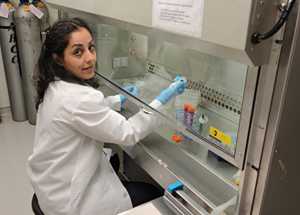
Paiyz joined the Institute for Regenerative Engineering under the guidance of Dr. Syam P. Nukavarapu in the Biomedical Engineering Program at the University of Connecticut. She focused on developing mechanically superior polymeric-carbon nanotube composite scaffolds for the regeneration of segmental bone defects. Prior to that, she graduated with honors from Southern Connecticut State University where she completed her thesis project titled “Study of chemotherapy responses in transformed murine cell line containing a temperature-sensitive mutation in the p53 gene.” Currently, Paiyz is a third-year Ph.D. candidate in the Material Science and Engineering program here at UConn. Her research focuses on exploiting the regeneration of bone tissue through a process that naturally takes place during fetal development (Endochondral ossification). For this, she is working on developing a polymeric-hydrogel hybrid scaffold system that is mechanically compatible with bone; furthermore, the hydrogel phase acts as a natural extracellular matrix on which cells will reside and differentiate further.

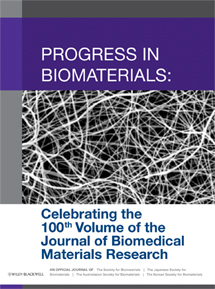 The Journal of Biomedical Materials Research (JBMR) has just published its 100th volume, Progress in Biomaterials, which features the top 25 papers it has published in its 50+ years. I am happy to report that one of our lab’s papers, “Electrospun nanofibrous structure: A novel scaffold for tissue engineering” was selected for inclusion. This article has been cited more than 1100 times. According to JBMR, the major criteria for inclusion of papers in this virtual issue was “the identification of articles that, in their time, were considered novel, original, state-of-the-art, groundbreaking, led to clinical application, and opened new areas of biomaterials research.” The editors commented “this pioneering paper by Laurencin showed that biodegradable electrospun nanofiber structures were capable of supporting cell attachment and proliferation and indicated that cells seeded on this structure could maintain phenotypic shape and guide growth according to nanofiber orientation.” Perhaps even more exciting, the editors chose figure 2 of our paper for the cover of the 100th Volume Celebration Edition.
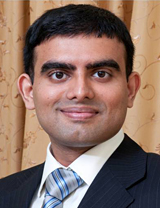 I am pleased to announce that Dr. Roshan James recently joined the Institute for Regenerative Engineering as a postdoctoral fellow. His current research focuses on the design and fabrication of novel biomaterials for musculoskeletal tissue engineering. His research interests include biomaterials, integrated tissues, and regenerative engineering.
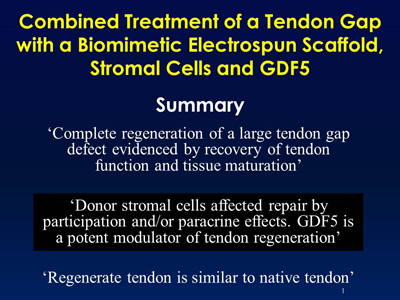 It is worth noting that Dr. James has made a significant impact on tendon tissue engineering. He has successfully developed a novel tubular scaffold system to regenerate a large gap defect in tendon tissue due to severe injuries. The scaffold system can also deliver adipose stromal cells and growth factors that facilitate the regenerative process resulting in new tendon tissue formation.
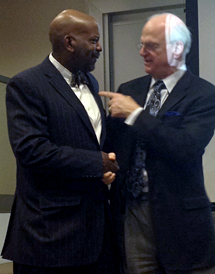 To further facilitate collaborations between UConn and internationally renowned experts, it was our great honor to host Ronald W. Rousseau, chair of the School of Chemical and Biomolecular Engineering at Georgia Institute of Technology. Dr. Rousseau, the Cecil J. “Pete” Silas Endowed Chair, delivered a talk entitled “Chirally Pure Pharmaceutical Products: The Role of Crystallization” in the Department of Chemical, Materials and Biomolecular Engineering at Storrs. His research focuses on separation processes and has resulted in more than 200 publications. Dr. Rousseau has received numerous awards including the prestigious Warren K. Lewis Award from the American Institute of Chemical Engineers (AIChE), the Clarence G. Gerhold Award from the AIChE’s Separations Division and the AIChE’s Forest Products Award. He is a fellow of both AIChE and the American Association for the Advancement of Science (AAAS). It was an honor having Dr. Rousseau at UConn, and we look forward to collaborating with him in the future.
 Last month, I was honored to deliver the Basore Lecture at Auburn. I appreciated the warm hospitality provided by the entire school. I want to thank Professor Mario R. Eden, Chairman of the Chemical Engineering for hosting me. During the visit, I also had the opportunity to join my friend and colleague, Dr. James Andrews a world-renowned orthopaedic surgeon on the Auburn football team sidelines.
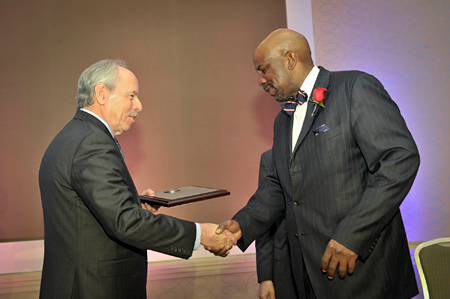
 I was proud to receive the prestigious Elizabeth Hurlock Beckman Award last month in Atlanta, Georgia. It recognizes individuals who have worked to inspire their students to be mentors themselves. I was nominated by my former student Dr. Saadiq El-Amin who is currently a professor of orthopaedic surgery at Southern Illinois University who is mentoring a new generation of students and individuals in the community. I am grateful to Dr. El-Amin and the Elizabeth Hurlock Beckman Award Advisory Committee for this award.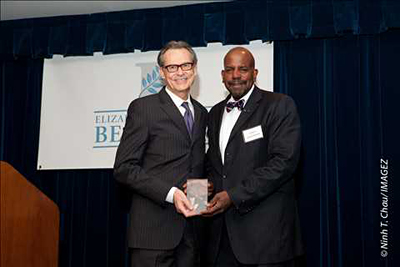
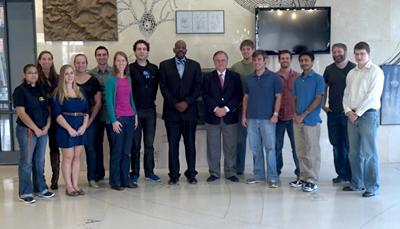 It was my honor and privilege to serve as Visiting Professor in the Department of Chemical Engineering at the University of Texas, Austin. During the visit, I delivered the Pirkey lectureship entitled “Musculoskeletal Regenerative Engineering: Taking on the Grand Challenges.” My talk highlighted the tremendous work being carried out here at the Institute for Regenerative Engineering. More specifically, I discussed the unprecedented strides predicted for the next decade in regenerating musculoskeletal tissues, a move from an era of advanced prosthetics to what we terms “Regenerative Engineering.”
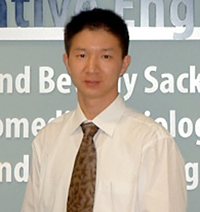 I am very pleased to announce that Dr. Tao Jiang, CICATS Investigator Advocate and Assistant Professor of Medicine, has been appointed to the faculty of the Institute for Regenerative Engineering. Dr. Jiang received a B.S. in Chemical Engineering in 1999 and an M.S. in Materials Science in 2001, both from Tsinghua University in Beijing.