Anubhuti Mathur, a student at Glastonbury High School who currently shadows in Dr. Sangamesh Kumbar’s laboratory, has earned top honors in two prestigious science and engineering competitions. Anubhuti earned second place in the Physical Science division of the Connecticut Science & Engineering Fair. Of the 600+ participants in this fair, she was among the six selected to represent Connecticut at Intel’s International Science and Engineering Fair this month in Los Angeles.
Earlier in the year, Anubhuti competed in the Connecticut Junior Science and Humanities Symposium. Here, she was one of fifteen selected from a pool of over 80 candidates for the oral competition. Anubhuti presented her research, “The Synthesis and Characterization of EGCG – PLGA Conjugates and Mixtures” to a panel of judges and an audience of her peers. She was awarded third place and the right to present her work at the National Junior Science and Humanities Symposium in Washington, DC in April.
We firmly believe in Anubhuti’s ability to both conduct high-level research and to effectively present her work is essential to her training as a future scientist or engineer. Congratulations from everyone in the Institute for Regenerative Engineering, Anubhuti!
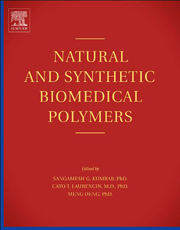 The Institute for Regenerative Engineering will launch Natural and Synthetic Biomedical Polymers in February, 2014. Published by Elsevier Science, this textbook summarizes the main advances in biopolymer development in the last decade. We believe it will be extremely useful for researchers in formulating their polymers with desirable physical, chemical, biological, biomechanical, and degradation properties for specific, targeted biomedical applications. I thank all the authors for their outstanding contributions. I also thank co-editors Drs. Sangamesh Kumbar and Meng Deng for all their time and effort in coordinating this.
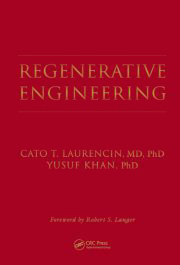 The Institute for Regenerative Engineering has launched a textbook entitled Regenerative Engineering. It explores the development and examination of vital organs and tissue types, addressing concerns as they relate to the regenerative engineering of various organ tissues, vascular tissues, bone, ligament, neural tissue, and the interfaces between tissues. I would like to thank all of the authors for their outstanding contributions. I also thank my mentor, Dr. Robert S. Langer of MIT who contributed the foreword. In addition, I value Dr. Yusuf Khan’s time and effort in putting together this textbook.